Sunday, 28 August 2011

booze-soaked Spain, the party may soon be over

For decades now, the Spanish have taken an easy line on foreign tourists and the oceans of alcohol they consume in coastal resorts every summer. Not any more. The party is definitely over in one of the most emblematic of Spain's mass tourism towns, Lloret de Mar on the Costa Brava, where, earlier this month, police fired rubber bullets at gangs of drunken revellers when they ran amok through the city, kicking in shop windows and setting a police car on fire. After two nights of clashes that dragged on until 7am, there were 20 injured, nine of them police officers, and 20 arrests. Tellingly – in a city of 40,000 with 25 discos, 261 bars and roughly a million tourists a year – all those in custody were foreigners, most of them reportedly French.

As far back as 2004 – when, after similar incidents, the then Catalan Minister of the Interior invented the phrase "binge tourism" – there were promises of clean-ups. This time, though, in a year which had already seen 15-year-old British expat Andrew Milroy stabbed to death outside a nightclub, (over which two French men have been arrested), the authorities say they mean business. "We've touched bottom on these questions," the mayor of Lloret de Mar, Roma Codina said. "We will be shutting down the most conflictive bars and banning prostitution in public." For good measure, he added, disco closing times were to be tightened up and there would be a crackdown on underage drinking. The police presence was massively stepped up, too.

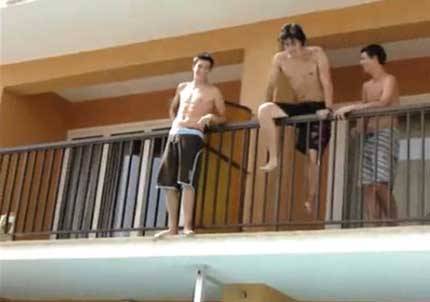
But no sooner had things quietened down in Lloret de Mar than trouble popped up elsewhere. Authorities in the Balearic Islands warned last week of a fresh wave of deaths from "balconing", a dangerous game in which inebriated tourists leap from their hotel rooms into the swimming pool below. This year, there have been three deaths – two Britons and one Italian, all in their twenties – and more than a dozen injuries from hotel falls in Ibiza and Majorca, well above the seasonal average. Majorcan hotel owners say they are raising the height of balcony railings and building screens between them; there have also been calls for educational campaigns in the tourists' home countries. It has come to this: leaflets explaining the perils of hurling yourself head first off buildings.

And in Magaluf, until last week you didn't even have to drink to get drunk. On Thursday six "oxy-shot" machines – which convert alcohol into gas, enabling your body to absorb it 10 to 15 times quicker than in liquid form – were confiscated by police from bars and discos in the town. This latest craze to hit Majorca has now been banned in the Balearics. Jose Cabrera, a toxicologist, explained on Spanish radio station Cadena Ser, "Oxy-shots can destroy your lungs, because there is no way of eliminating toxins, which is what happens when alcohol goes through the liver."

Not everyone behaves badly, of course. "The vast majority of tourists are just out for a good holiday, and a good time," says a Spanish man who would only give his name as MLC. He has been delivering beer to El Arenal and Magaluf, Majorca's two key German and British "ghettos" – as the Spanish call them – for 12 years. "But I've noticed that the hardcore drinkers are younger – maybe 15 or 16 – drinking more, and more violent than they used to be. There's no way I'd go into those ghettos alone. It's too scary. But only the British one, eh? The Germans are all right: they just drink, sit down and sing their heads off."

Certainly, at 1am on a Saturday night in Benidorm this month, in the plaza dubbed "British square" on local nightclub flyers, the atmosphere is anything but settled. The first thing you notice is you can't hear a word of Spanish, let alone see it among the swathes of adverts and signs in English for pints, pies, Yorkshire puds, football, fishfingers and beans.
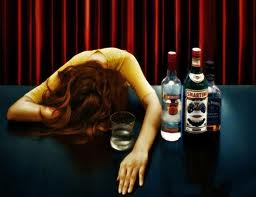
Instead, long lines of stag-nighters lurch and weave their way past huge knots of drinkers outside a row of open-air pubs, all dubbed with British-sounding names such as Piccadilly, Carnaby Street, The Red Lion and Wookey Hole. In fact, the area seems built on fake nostalgia for a slightly rancid vision of England on holiday three or four decades ago. The tribute bands for 1970s and 1980s acts such as Neil Diamond, Shakin' Stevens and Showaddywaddy help, of course, but so do the profusion of comedy clubs for vaudeville turns such as Albi Senior, The British Bulldog of Comedy, or the slightly saucy Roy "Chubby" Brown tribute: "blue, offensive and vulger" [sic]. You have been warned.

There is drinking – lots of it – but nobody's being sick yet, and I don't see any fights, and there are even a few families, their six- or seven-year-olds wandering around. In fact, if you took away the stream of adverts for prostitutes – verbal and otherwise – and the 30C-plus temperature, but retained the truculent, threatening atmosphere outside some of the noisier pub doors, this part of Benidorm would seem like a slightly dingy British inner city, right down to the peeling skyscrapers, trails of dog excrement, and potential for violence.

When trouble does flare up, British residents insist it tends to be limited to one particular zone. "This end of town, I've never seen anything in the five years I've been working here," says Tracy, waitress at one of Benidorm's oldest British pubs, the Duke of Wellington. "It's all around 'British square', that's where you get the lads all falling around and being sick." But given that tourism is one of the few boom industries in an economy in tatters – even if visitors' spending has dropped – you can't help thinking there's only so much tinkering with places like British square that the authorities will be willing to do.

Take Salou. Two years ago, the Costa Dorada resort became Spain's first place to oblige tourists to keep their T-shirts on away from the beaches – or face a €300 (£265) fine. But this town still plays host to the notorious SalouFest, where, for five days, up to 5,000 British students drink each other under the table for as little as £189 all- in. During that annual binge, getting the students to keep their Union Jack shorts and hotpants on in public would be a major achievement, let alone their top halves.

Nor is the tourism industry in great shape. The Benidorm coast's biggest English-speaking newspaper, Costa Blanca News, pointed out last week that although tourist numbers are up, Benidorm hotels are worried because spending is down by as much as 40 per cent. "These last two years have slowed down a lot," Tracy confirms, "we get more Spanish in, and they only have maybe a couple of halves of lager over an hour and a half. They don't spend as much as the British."

Such is the demand among northern Europeans for cheap booze-fuelled holidays, though – as little as €200 all-in for a week – that the region of Alicante has lost half a dozen of its most emblematic five-star hotels in the last three years. Others have downgraded to three or four stars. "There are Happy Hours that go on for the whole of the morning now," MLC confirms. "From 10 or 11am right the way through to 1 or 2pm."

In Barcelona, the third most popular European destination for British stag parties, they banned Happy Hours two years a go. But in Benidorm and other resorts such as Lloret de Mar, the price war has reached ridiculous extremes. In Bendiorm last week you could buy two vodka cubatas – Spanish long drinks usually containing three or four British measures – for €4, or a pint of bitter for €1 "until the first goal scored in the League game".

But as the Spanish are discovering, such offers are a two-edged weapon. Cheaper booze means more business, but it also means more reckless aggression and senseless bravado, as the rubber bullets of Lloret de Mar and the broken bodies of the "balconers" have shown this summer. And until that particular alcohol-powered conundrum is resolved, they are trends that may prove very hard to stop
 

Saturday, 27 August 2011

A court in France has agreed to extradite to Spain two suspects who were arrested for the fatal stabbing of a British teenager in Lloret de Mar,

A court in France has agreed to extradite to Spain two suspects who were arrested for the fatal stabbing of a British teenager in Lloret de Mar, Girona, last month. The 15 year old lived locally and was killed during a fight outside a club in the town on July 17.

The suspects are both aged 21 and were arrested near Lyon, where they live, on Wednesday last week. El País indicates that they now have three days to appeal the decision, and if they do not they will be extradited within the following 10 days.

It’s understood that they both admitted taking part in the fight when they returned to France the day after the tragedy, but denied any part in the stabbing.

A third person who was initially taken into custody was released two days later without charges.

Thursday, 25 August 2011

ton of hashish seized off the coast of Alicante

TWO SPANISH men have been arrested after a ton of hashish was seized from their boat in waters off the coast of Alicante yesterday.  Customs officials are investigating the possibility of the haul being linked to two other incidents off the coast of Valencia.

There are certain features, such as the cargo weight, that leads police to believe the incidents are related.  The use of small boats carrying similar loads of one ton each aroused speculation that a larger vessel in deeper waters could be supplying smaller craft at different points along the Mediterranean coast.
The boat apprehended at Alicante was a small six foot motorboat.  Despite its size it was loaded with bales of hashish secreted in the hull.  Customs officers noted that the boat was unusually low in the water, prompting a search.
The two men have been detained.


Tuesday, 23 August 2011

Spanish duchess to wed after lavishing children with wealth

One of Spain's richest women, the 85-year-old Duchess of Alba, said Tuesday she will marry a civil servant 24 years her junior in early October at a private family ceremony.
The announcement comes after the twice-widowed aristocrat gave away her vast inheritance last month to her five sons and daughter, reportedly to placate their objections to her planned union with Alfonso Diez.
"There will be no press, only a photographer who will distribute pictures to all media," the duchess said in a statement which was published in full by the online edition of Spain's ¡Hola! celebrity gossip magazine.
The duchess, renowned in Spain for her frizzy hair and colourful dress sense, said only her children, their current and past spouses and her doctor would attend the service.
"None of my friends will attend the marriage due to a lack of space", she added in the statement.
"With this statement I would appreciate it if the media would end all their false speculations and respect my peace."
The duchess, Maria del Rosario Cayetana Fitz-James-Stuart, owns swathes of real estate, palaces, mansions and treasures including paintings by masters from Goya to Velazquez, Murillo, Rembrandt and Rubens.
Earlier this month daily El Pais reported she had legally bequeathed the fortune -- estimated in the Spanish press at between 600 million and 3.5 billion euros ($850 million and $5.0 billion) -- in July but maintains control over it until her death.
Among the riches distributed to her children are the Liria Palace in Madrid dripping with masterpiece paintings, country estates, mansions and the Monterrey Palace and El Tejado castle in Salamanca, the paper said.
"I am Catholic and I want to marry but I don't know if I will because my children are creating difficulties. Hopefully things will work out, I think so," the duchess told radio station Cope in February.
"Alfonso does not want anything, he has renounced everything, he loves only me."
According to the Guinness World Records, the duchess has more titles than any noble on earth


La Aldehuela in Perales del Río (Getafe) Rave ends in multiple drug deaths

Pablo Alberto OG and EL, both 18 years old, died . Last night I returned from what was his last party 'rave' in the area of La Aldehuela in Perales del Río (Getafe)

A third, called Alvaro LG, 20, fared much better and is recovering at University Hospital Getafe where he remains admitted to the Intensive Care Unit in critical condition.

Police are searching for a possible fourth and involved, missing.

Have revealed the first toxicological analysis of serious injuries, this twenty something ingested large quantities of different drugs , including jimson weed, a very poisonous plant sued for its hallucinogenic effects.

This is a plant with that intoxicating witches. And with the bedalona (a substance also used for the same purposes), are the basis of known poison since ancient times.

Two plants of the nightshade family (such as potato or tomato), quite common and relatively easy to find , but very toxic. A minimum dose creates a case of poisoning with altered states of consciousness and hallucinations style LSD. And a higher dose just kills you.

However, the results have been negative to the rest of narcotics, even though his friends have said they also consumed 'speed' , a synthetic amphetamine. They have also ensured that the event occurred at a 'rave' illegal electronic music , organized outdoor without any security measure.

The first body was found around 18.00 on Sunday evening near a river after a couple alerted the Summa that he had seen a young man lying on the floor. He was later identified as Paul EL, 18.

Hours later, around 2300, Getafe Local Police and Civil Guard found the body of Alberto OG, of the same age, a few miles later, also near the River.

Poisoned food to demand better working conditions

Poisoned food to demand better working conditions . That could be the reason that led to a cook at the restaurant 'Chef Rubio' Empuriabrava to take a poisonous substance in food that was to serve dinner on Friday.

The local head of the prisoner discovered, Zoubida EH, neighbor Mataró (Barcelona) 32, casting a green powder on pots and immediately called the Catalan police proceeded to arrest the cook and requisition harmful product he kept in his apron.

The trial judge has withdrawn as a precautionary measure for handling food license in public. The detainee, who was released with charges , has been fired from the restaurant.

The product used the cook does not contain a high toxicity and is not fatal but can cause gastric problems. Sources of the Girona Health Region confirmed that there are no cases of poisoning from eating at the restaurant.

Twin boys found beaten to death in A Coruña

Two twin boys, aged 10, were found beaten to death at their home in the Monte Alto district of A Coruña City on Sunday afternoon and it was later confirmed that their stepfather had been arrested in connection with their death.

Europa Press indicates that it was the suspect himself who contacted the police.

He was found with them in the flat when officers arrived on the scene and is reported to have been under treatment for psychiatric problems. The un-named suspect is an unemployed construction worker who has lived with the boy’s mother, who is a local woman from A Coruña, for around the past year. It’s understood that she was out at work at her job as a waitress when it happened.

There is no known previous history of domestic violence.


British man seriously hurt in stabbing incident on the Costa Blanca

A man from Colombia has now been arrested for the incident in a bar in Alfaz del Pi where a man from the Czech Republic was also hurtEFE archive


Two men, a Briton aged 53 and a 28 year old from the Czech Republic, are under treatment in the district hospital in Villajoyosa after they were stabbed during a brawl which broke out in a bar in Alfaz del Pi early on Sunday.

La Verdad newspaper indicates that their injuries are serious but are not considered to be life threatening. Neither man has been named in reports.

It happened in a bar in El Albir at around 7.30 on Sunday morning. The Civil Guard made an arrest in connection with the stabbings early on Monday, a 19 year old man from Colombia who El Mundo reports was arrested in Benidorm.


Immigrant boat intercepted off the coast of Barbate

21 passengers on board the vessel needed treatment for minor hypothermia

Previous immigrant arrivals in Cádiz province - EFE archivePrevious immigrant arrivals in Cádiz province - EFE archive
enlarge photo


A group of 21 Sub Saharan migrants, including one woman, were rescued off the Cádiz coast on Monday, some six miles from Barbate. Their boat was intercepted at 7.30 am, reaching port in Barbate under Civil Guard escort shortly before 12 noon.

Most on board the small patera boat were in good health, although some needed treatment for minor hypothermia.

La Voz de Cádiz indicates that the boat was located after an anonymous call to the 112 emergency number at 8.30 on Monday morning reporting that an immigrant vessel had set sail from North Africa but had not yet reached its destination.

Another 13 migrants reached the Isla de Tarifa on two separate boats on Monday. They were all adult males from Morocco.


Three tons of cannabis seized off the coast of Valencia

A ton of cannabis has been recovered by the Customs Authority from a boat which was boarded off the coast of Villajoyosa on Monday. The two crew members, who are both Spanish, have been arrested and further arrests have not been ruled in the investigation which has now been taken over by the National Police.

It came on the same day that another two boats were boarded off the coast of Valencia province and their cargoes of cannabis were also seized. Diario Información indicates that each was carrying another ton of the drug. Officers suspect that all three boats could have been supplied with their cargo from a mother ship further out at sea.

There has been no confirmation as yet on the number of arrests made in Valencia.


£27.5m 'boiler room' family get 19 years in jail

A father and two sons have been jailed for a total of 19 years for running a £27.5m "boiler room" scam. The ringleader, Tomas Wilmot, was sentenced to nine years at Southwark Crown Court yesterday, while his sons Kevin and Christopher were given five years each.

The family controlled a syndicate of 16 boiler rooms that defrauded an estimated 1,700 investors of £27.5m between 2003 and 2008. Many of the victims were elderly and, in some cases, suffering from serious illnesses.

The sentences followed a three-year investigation by the Financial Services Authority including raids on the trio's homes in Guildford and Horsham, and an office in Bramley, Surrey. The boiler rooms operated from Spain with back offices in Malta, Italy, Slovakia, Lithuania, Austria, Andorra, Brazil, Belize, Dubai and some Caribbean islands.

Tracey McDermott, the FSA's acting director of enforcement, said: "The individuals convicted today sought to cloak their activities within an aura of respectability. They are, however, nothing more than cold-hearted criminals


Monday, 22 August 2011

Hotels tighten up on safety to discourage game that involves jumping off balconies into hotel swimming pools

Authorities at Spanish holiday resorts are warning of a fresh wave of deaths from a dangerous game played by drunken tourists that involves trying to jump off balconies into hotel swimming pools.

The game of "balconing" has been made popular by YouTube and social networks, with daredevil jumps into swimming pools or from balcony to balcony being filmed with the videos published on the internet.

The game also includes other dares, according to authorities, with some people falling after trying to clamber from one balcony to another or playing other drunken games without taking into account the danger of falling.

With three deaths and several serious injuries from balcony falls in hotels in the Balearic islands alone this summer, hoteliers and authorities worry that young tourists have still not woken up to just how dangerous the game is.

They say the number of falls already exceeds the seasonal average, despite measures taken by some hotels to make it harder to clamber over balcony railings.

Two British tourists are among the victims, with a 25-year-old woman and a 23-year-old man dying in falls at hotels in Ibiza's San Antonio resort earlier this summer, according to local press reports.

A 20-year-old Italian woman died this month after falling from a fourth-floor balcony in Palma, Majorca.

There have been more than a dozen injured. Last Friday a 20-year-old British man was one of two people seriously injured in separate balcony falls on the same night.

Authorities on the Balearic islands say the number of falls is already above the seasonal average.

Hotel workers blame the deaths and accidents mostly on alcohol and drugs and tell horror stories of finding young tourists hanging from balconies claiming to have lost their keys or trying to dive into fountains with only a few inches of water in them.

Some hotels have adopted British standard balcony railings, which are higher, in order to prevent jumpers and cut down on the number of deaths and accidents.

Tour operators have also tried to issue warnings about balconies, but hoteliers decided against a larger campaign – including video warnings – that was touted last year after six people died in falls.

"We will consider taking fresh measures," said Rafael Bosch, spokesman for the regional Balearic government. "The incidents are very unfortunate and this is not the kind of tourism we wish to encourage."


Sunday, 21 August 2011

Cabo de Gata beach tariff whips up storm

THE Junta has been called in to investigate how Nijar town hall and a local landowner are getting away with charging people to park their cars at Cabo de Gata’s best beaches.
Visitors to beaches, including Monsul, are having to pay between three and seven euros to take their cars, or face a 20 minute walk.
Cabo de Gata is supposed to be a protected area and the beaches there are the only ones left in Spain that are unspoiled by the tourist boom and speculation run wild. Naturally, everyone has the same right to go to them but Nature demands certain precautions.
The barrier at the entrance to the dirt track in summer is a step in the right direction, and so is the bus service for beach-goers. However, the bus is a proper tourist coach and not at all appropriate for its mission. Moreover,the buses are not frequent enough to meet the demand and there is little or no shade provided at the stops (depending on whether or not the wind has blown the cane shelter away).
Charging a fee for parking does seem a bit over the top and it does little to protect the area anyway. Perhaps it would be more practical to have a little train on wheels running to and from the beaches on a special paved lane for a reasonable fee per passenger. Having a paved lane would prevent the amount of dust raised by vehicles on the dirt track that is causing the death of plants on either side.


The hilltop Spanish town overshadowed by a debt mountain

Nestling in the pine-clad hills above Barcelona, the ancient terracotta-tiled town of Moia could be straight out of a fairy tale. Narrow cobbled streets wind up towards the honey-coloured church in the centre, where the main plaza is decked with streamers and flags from the recent fiesta.
But for all its Disney-esque charm, Moia is rotten to the core.
"We are broke," said Dionís Guiteras, the town's newly-elected mayor. "We managed to pay the council staff on July 31, but I don't know if we will be able to on August 31. We haven't got any money to pay the electricity company, so maybe the street lights will go out. All of our buildings could be for sale."
In a bleak warning to residents, Mr Guiteras even prophesied that, unless Moia's residents rapidly adopted money-saving measures, the town would not be able to bury their dead. "We cannot keep our heads in the sand," he said.
This apocalyptic vision of the Spanish economic meltdown may seem pessimistic - but the near-bankruptcy of Moia town council is far from unique.


Saturday, 20 August 2011

The Canal24 only showed half of the incident between José Mourinho and Tito Vilanova in an attempt the place the blame on Barcelona

The RTVE State Broadcaster Advisory Council in Cataluña has said that TVE Spanish Television manipulated the facts in their coverage of the Supercopa second leg between Barcelona and Real Madrid last Wednesday.

Canal24 is accused of manipulating the images of the incident between José Mourinho and Tito Vilanova so that it appeared Vilanova attacked Mourinho, when in fact just seconds earlier Mourinho has started the aggression by poking Vilanova, the Barcelona deputy coach, in the eye. That was not shown in the report.

The Advisory Council note that this is not the first case of ‘severe partiality’ in reporting, considering it ‘clearly intentional manipulation of the information’. The Council has written to the acting Chairman of RTVE, Manuel Esteve, in which they ask for responsibilities to be met for what has happened and ask that the person responsible accept his or her responsibility. They also want a public apology for the error committed ‘which can have no explanation of excuse’.

There was another case of bias in May 2009 when once again the coverage of what was a Champions League Semi Final was deemed to be clearly against F.C. Barcelona.


The Gays In Spain Complain They Must Refrain—Or Why Madrid’s Anti-Pope Kiss-In Fizzled

Spanish might be a romance language, but Spanish police nixed Thursday’s planned kiss-in set to coincide with Pope Benedict XVI’s arrival in the heavily Catholic country.
Though some 100 gays and lesbians had planned the civil action along Madrid’s Calle Serrano to protest the Pope’s hard line against homosexuality, authorities blocked protesters less than a kilometer from their meet-up spot and forced them to disperse. Big Papa is in the Spanish metropolis as part of a four-day celebration of World Youth Day.
The queer protest had been organized on Facebook by a group defending LGBT rights, said activist/performance artist, Jaime del Val. A  similar smooch-fest successfully greeted the Pontiff when he came to Barcelona last November.
Unmolested by smooching sodomites, the Pope spoke to a group of nuns about threats to the religion:
“This is all the more important today when we see a certain ‘eclipse of God’ taking place, a kind of amnesia which, albeit not an outright rejection of Christianity, is nonetheless a denial of the treasure of our faith, a denial that could lead to the loss of our deepest identity.”
Treasure of the faith—like the ghastly Spanish Inquisition, held in the very same town some 500 years ago?


Enrique Iglesias: "I know exactly what's going on in Spain

Spanish pop star Enrique Iglesias said he knows "exactly what's going on in Spain," and regretted that some Spanish media "have taken out of context" certain things he said about the 15-M movement and accuse him of not understanding or even having any interest in the problems afflicting his native land.

"I know exactly what's going on in Spain," the artist, who lives in Miami, told Efe. "It's no secret there are 6 million people unemployed, almost 22 percent of the population, and that Spain has been one of the European Union countries hardest hit by the crisis."

Enrique Iglesias was reacting to news published in the last few hours in different Spanish media about an interview the Spanish singer gave Revista 40 magazine in which he was asked about the 15-M movement.

"The 15-M? I don't know what that is," the artist said in the interview about a movement that in Spain has been dubbed the 15-M because it started last May 15 to protest austerity measures, though foreign media refer to it as the Spanish Revolution.

Enrique Iglesias, who in the interview said that outside of Spain the movement of the "indignados" is known as the Spanish Revolution, said that he is perfectly aware of the realities of his country, even though several media have accused him of having no idea of what goes on in Spain and lacking any interest in finding out.

"I'm up to date on what's happening, not only in Spain but in the world, because it would be irresponsible of me not to keep informed," the artist said, adding that he is also aware of "a movement of young people who have raised their voices in protest in the plazas of Spain's principal cities."

And he regretted that some media have "taken out of context with such premeditated treachery" what he described as "a misunderstanding in very bad taste."

"It's obvious there was a lot of bad faith on the part of whoever published that extract with the miserable intention of making money by selling a few more magazines or by getting a laugh at my expense," he said.


Riot police in Madrid have again confronted protesters who are objecting to the high costs of Pope Benedict XVI's visit to Spain.


The sheer scale of the celebrations in Madrid has sparked angry demonstrations over the large expense at a time of economic hardship, with unemployment for under-25s running at more than 45 per cent.

Protesters - including some priests - are fuming over the official 50.5 million euro ($70 million) price tag, excluding the cost of police and security, of the Catholic youth celebrations.

Police chased away about 1,000 demonstrators, keeping them from a procession where the Pope was joined by large crowds of Catholics.

Protesters have been marching in Madrid over the last sever days, with activists on Friday decrying the police crackdown, yelling "This is not the Pope youth!" and "No to police violence!".

Scores of police prevented the activists from marching into the city's central Puerta del Sol square, where clashes also took place on both Wednesday and Thursday nights.

Organisers of the festivities say most of the cost will be covered by a registration fee from the pilgrims and the celebration will be a massive tourist boost for Spain.

Celebrations
Wherever the Pope goes hundreds of thousands of ecstatic Catholics are there to meet him.

Tens of thousands of young pilgrims, many waving national flags and wearing orange floppy hats made for August 16-21 World Youth Day celebrations, cheered his arrival at Madrid's Almudena Cathedral.

The pontiff warned against "false gods" as he celebrated mass in Madrid's cathedral Saturday, embarking on a final weekend of dazzling Catholic festivities.

"Do not be intimidated by surroundings that would exclude God and in which power, wealth and pleasure are frequently the main criteria ruling people's lives," the Pope warned the seminarians.

"You may be shunned along with others who propose higher goals or who unmask the false gods before whom many now bow down."

Earlier in the morning, the Pope heard confession from four young pilgrims - two women and two men - in Madrid's city-centre Retiro park.

Media access was restricted to keep the confessional private, but television helicopter cameras showed the Pope's party at the centre of a line of 200 temporary confessionals set up in the park.

The Pope will hold a prayer vigil in the evening at an airbase south-west of the capital, where the pilgrims will spend the night under the stars on an esplanade the size of 48 football pitches.

He will celebrates mass there on Sunday morning at a white altar almost 200 metres long in front of a wave-shaped stage and under a giant parasol "tree", made of interwoven golden rods.

After 10 years working as a bodyguard in Spain's Basque country, where mayors need 24-hour protection and university professors check their cars for bombs

After 10 years working as a bodyguard in Spain's Basque country, where mayors need 24-hour protection and university professors check their cars for bombs, Julen knows when he's not welcome.

The animosity that fueled decades of separatist violence has softened with recent political developments, which includes surprise electoral wins for nationalist candidates in May. But that does not mean it is gone, he said.


In the towns where he accompanies local councilors and ex-politicians about their daily lives, Julen -- a false name he uses when he's working -- is still seen by many as a lackey for Spain's centuries-old repression of the Basques.

"Everyone wants this to end, but let's not confuse hope with reality," said the athletic 50-year-old.

"We still get refused food in shops and restaurants if we're recognized and get a mouthful of insults instead. The level of hostility has diminished, but it hasn't disappeared."

It's been 75 years since former dictator Francisco Franco ordered the fire-bombing of the Basque market town of Guernica in the Spanish civil war, heralding a renewed wave of repression of Spanish Basques, a culturally and linguistically different group in northern Spain and France.

Franco's ruthless suppression of his opponents was especially brutal in regions of Spain with some measure of autonomy like the Basque country and extended to language and culture as well as political beliefs.

Citizens caught speaking the Basque language faced public humiliation and fines, and incarcerated protesters reported torture, sexual abuse and even murders committed by the regime's police officers and paramilitary thugs.

Spain's transition from fascism to democracy after Franco's death in 1975 led to a sharp decline in human rights violations committed by the state and returned a degree of autonomy to Basques not seen since before the civil war.

The region recovered its own police force and some of the tax independence it historically enjoyed, and savvy politicians have continued to squeeze more powers from minority governments in Madrid.

While Basque resistance to the Franco regime won supporters across Spain and abroad, that support waned after ETA (Basque Homeland and Freedom) militants rejected offers of amnesty after 1975 and stepped up separatist violence instead.

The more than 800 people who died in the heightened violence included women and children in the wrong place at the wrong time or bystanders in undercover state-sponsored attacks on ETA suspects.

ELECTORAL UPHEAVAL

Hope for an end to the conflict is stronger than ever since ETA's political wing Batasuna rejected violence and cajoled the group into a partial ceasefire in September 2010.

Although Batasuna was banned after a change in the law, a court ruled that candidates linked to it could run in nationwide polls in May, prompting the formation of a new coalition, Bildu (Gather, in Basque), which ran on a non-violence ticket.

Bildu brought together a left-wing movement fragmented by their views on ETA's violence but committed in their struggle for an independent Basque homeland, and now the coalition has control of one of the Basque country's three provinces and town councils across the region and in neighboring Navarre.

Bildu has upset Spanish politicians by taking down Spanish flags and banning bodyguards from town halls on the grounds the ceasefire has removed the need for them, but the largest point of disagreement with Madrid is Bildu's refusal to ask ETA to disarm and disband.

Basque society, too, remains split over whether Bildu's victories in recent local elections are a good or a bad thing given the coalition's links to ETA apologists.

"They have dragged themselves out of the violent waters, but they haven't put the 'no swimming' sign next to them yet," said Txema Montero, a former leader of ETA's political wing who was expelled after calling for ETA's disarmament as early as 1992.

Moroccan police arrest 118 sub-Sahara migrants

Moroccan police yesterday arrested 118 migrants from sub-Saharan Africa who were heading to a Spanish enclave in the country, local officials said. The migrants were apprehended in the Gourougou forest in Morocco’s northeastern Nador region as they attempted to enter the Melilla enclave, either by sea or by scaling the perimeter wall. They will be expelled to Algeria, the last country they transited before reaching Morocco, according to Morocco’s illegal immigration unit. Madrid in May reaffirmed Spanish sovereignty over Melilla and Ceuta, another tiny enclave on the north African coast, after the Moroccan government called for a dialogue on the matter.


Friday, 19 August 2011

Baton-wielding anti-riot police in Madrid have dispersed about 150 protesters angry over the visit by the Pope

Baton-wielding anti-riot police in Madrid have dispersed about 150 protesters angry over the visit by the Pope and who had gathered in a main square.

The Pope earlier criticised those economies that put "profits before people". 
Police had earlier blocked off the central Puerta del Sol square and used vans to hem in the demonstrators, furious over the cost of hosting the 84-year-old Pontiff, who arrived in Madrid earlier Thursday for the Catholic youth festival.
"They (the police) hit me five or six times. We came unarmed, we did nothing, we were here for a public demonstration," said Bruno, 30, who had blood on his elbow.
"Thank goodness I covered my head or I would have hit in the head," he said.
Ines Monroy Perez, 58, a museum employee said "they (the police) pushed me and I hid. People were running and they were being hit."
A spokesman for the Madrid emergency services said they had not attended to any injured.

Tough Time for Spain’s Olive Oil Stock Market

Given the rough ride that has been Spain’s olive oil industry in recent years, the sector’s dismal July-August figures for olive oil trades should come as no shock.

Between July 12 and August 12, sales transactions between producers and traders fell to 24,484 tons, representing a 53 percent drop from the previous month.

Prices continued to drop as well. According to EFEAGRO, extra virgin olive oil prices fell by 2.27 percent (1.9 /kg), while the price of oils labeled “virgin” and “lampante” dropped 1.53 percent (1.74/kg) and 0.73 percent (1.63/kg) respectively.

When compared to the same period in 2010, depreciation was even greater, with lampante oils down 3.66 percent and extra virgin oils down 4.65 percent.

Futures purchased through the Mercado de Futuros del Aceite de Oliva (MFAO), Spain’s official olive oil stock market, were also lower than expected.

Just 200 MFAO contracts were signed this August 4-10 with prices between 1,630 and 1,760 per ton. Contracts were distributed among five of the seven maturities open to negotiation: 25 contracts for November 2011, 50 for January 2012, 50 for March 2012, 50 for May 2012 and 25 for September 2012.

Investors and producers have serious doubts about the upcoming campaign for 2011-2012, which begins in October. On the upside, foreign exports have shown some promise. Between October 2010 and April 2011, exports grew considerably in countries like Brazil (21 percent), Canada (12 percent), United States (6 percent) and Australia (+1 percent), though Japan saw a drop in exports (-10 percent).


poking the eye of a Barcelona coach and calling them 'a small club' - can only be seen as trying to inflame the situation.

We all have a moment of madness in football but you cannot behave the way Jose Mourinho did on Wednesday. 

His actions - poking the eye of a Barcelona coach and calling them 'a small club' - can only be seen as trying to inflame the situation. 

He is setting a bad example to his players.

Flashpoint: Mourinho goes for Barca assistant Vilanova

Flashpoint: Mourinho goes for Barca assistant Vilanova

Real Madrid are following his lead, playing in that aggressive manner and crossing the line. 

Barcelona are frustrating to play but they - and Lionel Messi in particular - are a joy to watch. 

When Mourinho behaves in that way, he is looking for a reaction - and he gets one from his players each time the sides meet. 

But he went down in my estimation.

I can understand how it has come to this, though.

It reminds me of the situation between my Arsenal team and Manchester United from 1998 to 2002. 

We were second best for that period and that causes such frustration. People cross the line - then others follow.

Aggressive tone: Real Madrid are following Mourinho's lead

Aggressive tone: Real Madrid are following Mourinho's lead

I had my moment where I lost my temper, jumping on Ruud van Nistelrooy's back at the height of the rivalry. 

It was pure frustration and they then became the same, kicking lumps out of us at Old Trafford the night we won the title there in 2002.

It doesn't make it right, though. 

It's such a shame because Real have closed the gap to Barca. Mourinho has them well drilled but I have never seen him look as serious. 

When Barcelona went in front, all the colour seemed to drain out of his face.

In trying to deal with superior opponents, Real have become too physical and Mourinho has created that behaviour. 

They can't take being second best. 

This is the biggest challenge Mourinho has faced. Everywhere he has gone, he's managed to win at all costs. 

But Barcelona are so good and feel they have to raise their game even higher when they face Real. 

These matches are fascinating but they could do without the Mourinho sideshow. 

Lots of people want Mourinho back in England and I don't think that has changed. I would welcome him back but


Defeated coach Jose Mourinho jabbing a rival in the eye.

Spain reacted with outrage Thursday after Barcelona's 3-2 Super Cup win over Real Madrid descended into violent scenes with defeated coach Jose Mourinho jabbing a rival in the eye.
Television images and photos on the front pages Thursday showed Mourinho poking his finger into the eye of Barcelona coach Pep Guardiola's assistant Tito Vilanova as players brawled on the field.
"Pito Vilanova? I don't know who this Pito is," Mourinho said after the match.
Television pictures showed the Portuguese coach walking over to Vilanova at the side of the pitch and poking him in the left eye.
Barcelona's Vilanova could then be seen giving a smiling Mourinho a hard slap in the back as he walked away.
Barcelona defender Gerard Pique accused Mourinho of wrecking Spanish football.
"Sincerely, Mourinho is destroying Spanish football. Sometimes they say we Catalans are the guilty ones, but the guilty ones are over there in Madrid," he said after the match according to broadcaster RTVE.
"Every game cannot finish like that," he said.
A Lionel Messi double took the European and Spanish champions Barcelona to a 5-4 aggregate win over bitter rivals Real Madrid in their Super Cup second leg clash in the Camp Nou.
But the bad feeling between the two sides boiled over at the end of the match, which ran past midnight and into the early hours of Thursday.
Brazilian Marcelo set off the sparks when he was dismissed for a late challenge on former Arsenal captain Cesc Fabregas, who made his debut towards the end of the game.
In an ensuing brawl on the pitch, Mesut Ozil of Real Madrid and Barcelona's David Villa were also sent off, bringing the red-card total to three.
Fabregas tried to play down the scrap, saying after the match: "It is very competitive football, they are the two greatest clubs in the world, it is a very strong rivalry."
But Guardiola said the violence risked getting out of hand.
"One day someone is going to get hurt and that is what we have to watch out for," he told reporters after the match.
The press lashed out.
"Deplorable Madrid, deplorable Mourinho," blared a headline in Barcelona-based sports daily Mundo Deportivo above pictures of Mourinho's eye-jab.
"Deplorable Mourinho," said the front page of the daily Sport.
"Mourinho and Guardiola's assistant Tito Vilanova were also deplorable protagonists in the final free-for-all. Mou put his finger in the eye of Pep's number two and he replied by slapping the Portuguese on the back," said daily Marca.


Thursday, 18 August 2011

Brits are back in force this summer on the Costa Blanca according to a recent report and without a doubt, they are underpinning the tourist sector in the Alicante province.


The figures of tourists visiting the Costa Blanca this summer have been called “spectacular” by HOSBEC, the Costa Blanca Hotel Association, and they have confirmed that the summer of 2011 will bring record breaking figures of tourists to the area, not only British tourists but also Spanish families, who have returned to the ‘White Coast’ en masse. Some hotels have boasted 100% occupancy for the first time in a decade and some hoteliers have confirmed that residents of the United Kingdom make up the majority of their visitors.

British tourists were targeted earlier this year in a multi million euro publicity campaign by the Costa Blanca Tourist Association and many hoteliers are crediting that campaign to the success of the summer. In the first two weeks of August alone, there has been a 19% increase on visitor numbers in Benidorm and three out of ten (31%) of the clientele in Benidorm hotels come from Great Britain, which is only surpassed by the Spanish, who represent 56.1%.

A spokesman for HOSBEC told RTN: “The British market is now, more than ever, the best guarantee for the tourism industry of Alicante and not only during the months of low season-November to February, when their presence is essential, but in the midsummer, as has happened on this occasion.”

Netflix is planning to launch in Spain

Netflix is planning to launch in Spain and Britain in the first half of 2012 and is looking at a number of other countries in Europe and Asia for subsequent roll-outs, according to people familiar with the matter.
International expansion is seen as a key driver for growth in the coming years, according to Chief Executive Reed Hastings. Despite rapid growth in the US and Canada, the rate is expected to slow, particularly given a recent 60 per cent price increase that has alienated some customers. Netflix launched its Internet streaming service in Canada in 2010, and in July 2011, announced it would launch in 43 Latin American countries by the end of year.
Reports have now emerged that Netflix is talking to studios about acquiring content rights prior to launching in Spain and Britain in the first half of 2012. A move into Britain has been long-expected, but Spain could pose more of a challenge given the high levels of piracy and unemployment. DVD sales are very low in the country and there is no real digital download business. Apple Inc.’s iTunes Store doesn’t sell movies and TV shows in Spain.
The Spanish roll-out is seen as a test of whether people used to watching movies at home for free will pay about €6 per month for content of higher quality and easier to find than on piracy websites.
The president of a Spanish producers’ association told ScreenDaily that the company has been in talks with local content makers as well.
Other countries on Netflix’s radar are understood to be South Korea, the Netherlands, Belgium, Luxembourg and the Scandinavian nations. As it examines new foreign markets, Netflix is seeking countries with high broadband Internet penetration rates and popular content that is available to be licensed and not locked up in exclusive contracts with other distributors, the people close to the matter said.

New figures have revealed that a large percentage of Brits still favour making a money transfer and purchasing property in Spain

.

Data from the College of Registrars shows people from the UK were the biggest buyers of second homes in the country than any other nation.

Last year, 4,350 properties were snapped up by British investors, while the French bought 1,627, making Britons responsible for one in every four purchases by foreigners.

However, despite UK buyers leading the field, 2010 saw a rise in demand from northern Europeans.

Mark Stucklin, managing director of home information web site Spanish Property Insight, welcomed the diversification of investors.

He commented: "The holiday-home market used to be far too dependent upon British buyers, which was a risk that many promoters and the banks' lending to them failed to understand. With the process of international diversification sales should slowly start to increase."

Swedish demand increased by 102 per cent, while Norwegian interest in Spain rose by 58 per cent.

In the hope of retaining and gaining more British investors, the Spanish government has introduced more information in English so that buyers are accurately informed on legal issues.

House builder Taylor Wimpey de Espana noted that so far this year, it has received an overall customer satisfaction rate of 86 per cent.

Sales and marketing director at the company Ignacio Osle described how Mallorca remains one of the most popular Spanish spots for Brits looking to invest in the country, with prices often higher than on the mainland.

Mr Osle said: "Brits are and have always been Spain's biggest fans attracted to the easy reach location, sunny skies and laid back lifestyle."

James Dearsley, European sales director for Atla

Richter students study migration in Spain

While many students spent their summers on the beach soaking up the sun, two SMU juniors spent their time
researching African migration patterns in Spain.
Hannah Bliss and Lashlee Warner travelled to Spain as part of the Richter International Fellowship Program, which allows University Honor students the chance to research international projects.
The Paul K. and Evelyn E. Cook Richter Memorial Funds fund the Richter International Fellowship Program that made Bliss and Warner's trip possible. Second, third and fourth year students in the University Honors Program can apply for the fellowship.
SMU is one of 12 schools offering Richter Fellowships.
As Richter scholars, Bliss and Warner conducted research on African immigrants in the Spanish cities of Madrid, Ceuta and Valencia.
Bliss, a political science and accounting major, hoped to gain "a more comprehensive understanding of the way refugees are viewed in the Spanish culture as well as . . . [how] African migrants begin to affect Spanish society."
She hoped that along with gaining information and research this topic, she could "find compassion for the people we were meeting along the way and the hardships they encounter as immigrants."
"We looked at various facets of the migration issue in Spain: what was motivating people to seek asylum in Spain from Africa? How many people were coming? What countries were they from?" Warner, a junior premedical student, said.
Bliss and Warner conducted interviews, procured
background reading, and consulted pertinent NGOs to better understand "the process for these migrants and refugees in finding housing, jobs, and healthcare."
"We visited offices and spoke with immigrants to gain a true understanding of daily life as a migrant within Spanish borders," Bliss said.
Although Bliss and Warner enjoyed travelling throughout the country, both found that interacting with African immigrants was the best part of their trip.
"It was a phenomenal feeling to put a face to the issue that we were studying and to learn about the immigrants' families, home countries, and experiences in moving to Spain," Warner said.
"Oftentimes, the simple question ‘where are you from?' can have powerful effects on people. For many immigrants, the idea that someone wants to know their story and genuinely cares about their roots is a wonderful thing," Bliss said.


Violence breaks out on Madrid's streets on eve of Pope's visit

Violence flared last night as a demonstration against the Pope's arrival in Madrid turned ugly.

Anti-Pope protesters marched on the Spanish capital's central Sol plaza to voice their concerns about the 50 million euro price tag of the four-day trip.

But what was being billed as a peaceful protest changed when marchers began taunting the thousands of pilgrims who were congregating in the area.

Abuse: The sickening scenes saw the pilgrims taunted and shouted at by protesters

Abuse: The sickening scenes saw the pilgrims taunted and shouted at by protesters

Taunting: Protesters scream abuse at pilgrims as violence flared in the Sol plaza in Madrid

Taunting: Protesters scream abuse at pilgrims as violence flared in the Sol plaza in Madrid

Defending: A young pilgrim argues with a protestor, who was marching against the Pope's visit to Madrid

Defending: A young pilgrim argues with a protestor, who was marching against the Pope's visit to Madrid

Welcome: Pilgrims walking up through the Sol plaza metro's steps were greeted with volleys of abuse by the demonstrators

Welcome: Pilgrims walking up through the Sol plaza metro's steps were greeted with volleys of abuse by the demonstrators

Police, who forced the marchers from the square, arrested eight protesters. A total of 11 people were reportedly injured.

The marchers included the 15-M 'indignant' movement, which is against the government's austerity drive. Gay rights groups and others who oppose Catholic teaching were also in attendance.


15-M said in a statement: 'We are not angry about the Pope's visit, which some will agree with and others won't, but rather over the financing of it with public money, especially at a time when many services are being cut because it's necessary to curb government spending.'

Kicking off: Anti-Pope protesters clashed with riot police before the pontiff's visit to Madrid

Kicking off: Anti-Pope protesters clashed with riot police before the pontiff's visit to Madrid


Detained: This girl was dragged away by police officers during the protest in which eight people were arrested

Detained: This girl was dragged away by police officers during the protest in which eight people were arrested

FOOTBALL LOSS AVERTS CHAOS:

 Potential chaos was averted last night as Real Madrid lost in the Spanish SuperCup final to Barcelona.

Had José Mourinho's team won in the second leg match at Barcelona's Nou Camp, Madrid's streets would have been swarming with football fans.

They traditionally celebrate cup wins by descending on the Plaza Cibeles - where the papal stage had been set up.

But a last minute goal from Barca star Lionel Messi, which saw the Catalan team win 5-4 on aggregate, ensured Madrid fans stayed at home.

Protesters walked into the old city centre shouting 'Nothing for the Pope from my taxes'.

And when police tried to clear the square, demonstrators clashed with riot police by throwing bottles and water at them.

Pope Benedict XVI will arrive at Madrid's Barajas airport at 12noon today for a four-day visit to celebrate World Youth Day.

It is the third time the pontiff has visited Spain since his papacy began in 2005, and the second in less than a year.

The celebrations began on Tuesday with a mass in the capital's Cibeles Square, where thousands of pilgrims from all over the world waved their national flags.

One million pilgrims are expected to take part in the events, which will be policed by more than 10,000 officers.

Lashing out: Police officers scuffled with protesters during the demonstration

Lashing out: Police officers scuffled with protesters during the demonstration

Clashes: Riot police and demonstrators fought in Madrid's Sol square the day before the Pope's visit

Clashes: Riot police and demonstrators fought in Madrid's Sol square the day before the Pope's visit


Beaten: A demonstrator cowers as he is arrested by police officers during the anti-Pope protest

Beaten: A demonstrator cowers as he is arrested by police officers during the anti-Pope protest

Scuffle: A policeman tries to get a protester, who had claimed he was a member of the press during the incident, under control

Scuffle: A policeman tries to get a protester, who had claimed he was a member of the press during the incident, under control

Angry: A man is held back during the protests against the Pope's visit

Angry: A man is held back during the protests against the Pope's visit

Anti: A girl holds up a photograph of the Pope, which reads 'tear his face'

Anti: A girl holds up a photograph of the Pope, which reads 'tear his face'

Spanish police on patrol yesterday at the World Youth day celebrations that are taking place in Madrid and will be attended by Pope Benedict XVI

Spanish police on patrol yesterday at the World Youth day celebrations that are taking place in Madrid and will be attended by Pope Benedict XVI

Anti-Pope protests
Anti-Pope protests

Peaceful: Earlier on Wednesday, anti-Pope protesters, who were allegedly targeted by the chemistry student, had been complaining at the cost of the pontiff's visit at a time of severe economic austerity

But his visit is seen as controversial for a country that is heavily in debt, with rising unemployment.

Protestors are angry that the budget is being spent on giant screen TVs, portable toilets and confession stalls.

Tax breaks have also been granted to corporate sponsors and perks such as discount subway and bus tickets are being handed out to pilgrims.

Last night's violence came on the same day that police arrested a 24-year-old chemistry student suspected of planning a gas attack against the protesters opposing the visit.

Departing: Pope Benedict XVI waves as he boards a plane at Rome's Ciampino airport on his way to Madrid

Departing: Pope Benedict XVI waves as he boards a plane at Rome's Ciampino airport on his way to Madrid

A statement from officers said Jose Perez Bautista, of Puebla, Mexico, boasted online how he planned to attack anti-Pope protesters with 'suffocating gases' and other chemicals.

He had been working as a volunteer for the visit and was arrested at a convention centre where the hundreds of thousands of pilgrims coming to town for the papal visit are supposed to pick up their accreditation.

Police searched his apartment in the wealthy Salamanca district of Madrid and seized an external hard-drive and two notebooks with chemical equations that had nothing to do with his studies.

Police have 72 hours from the time of the arrest to take him before a judge at the National Court for questioning or release him.

A court official said he would appear before the judge today at the earliest.

Pilgrims attend a mass at the Cibeles square last night on the first day of the World Youth Day celebrations which the Pope is due to attend tomorrow

Pilgrims attend a mass at the Cibeles square on the first day of the World Youth Day celebrations


Monday, 15 August 2011

Stabbed Briton still critical in hospital on Ibiza

The 26 year old British man who was stabbed in the early hours of Saturday outside a bar in Sant Antoni, Ibiza, remained in intensive care on Sunday.

He was stabbed in the chest and legs and is said to be in a critical condition in intensive care in the Can Misses Hospital, although he is conscious.

Hospital sources gave the man’s initials to Europa Press as A.A. and say that his condition has not changed since he was taken off assisted breathing on Saturday after surgery.

He was found injured at 1.35am outside the Plástic bar in Avenida Doctor Fleming in Sant Antoni, and the Guardia Civil have still be unable to unravel exactly what had happened.


SPAIN ready to offer asylum to Assad and his family in Spain

Spain sent a special envoy to Damascus last month to convince President Bashar al-Assad to accept a plan to end months of violence in the country, a Spanish news report said on Monday. The government was also "ready to offer asylum to Assad and his family in Spain," the country's leading daily El Pais said.

The violence in Syria has killed around 2,200 people since March, including some 400 members of the security forces, according to rights activists. Syrian authorities have blamed the bloodshed on armed gangs and Islamist militants.

Spanish Prime Minister Jose Luis Rodriguez Zapatero sent Bernardino Leon, who was at the time one of his senior aides, to Damascus in July "to propose a transition plan for a peaceful solution to the revolution," El Pais said, quoting sources close to Leon.

The mission was so secret that Leon travelled alone using an ordinary passport rather than a diplomatic one. He never set foot in any public building in Damascus, instead meeting with Syrian officials at their homes.

El Pais said, "successive Spanish governments have maintained ... a special relationship with Syria that is beneficial to both countries.

"Zapatero is no exception," and had maintained telephone contact with Assad since the start of the uprising.

Leon's three-point proposal to the Syrian regime included an immediate halt to the repression, the holding of a national conference in Madrid of all Syrian parties in the conflict that would outline a timetable for transition, and the formation of a new government with members of the opposition.

But the proposal was soundly rejected. "My impression is that (Assad) will not compromise on anything substantial," Leon said on his return, El Pais said. "My interlocutors were totally detached from reality."

Aides to Leon said he did not meet with Assad, but other sources told El Pais that he did. The mission was the last Leon would carry out for the Spanish government before taking up his current post as EU Special Representative for the Southern Mediterranean.

The UN Security Council is due to hold a special meeting on Thursday to discuss human rights and the humanitarian emergency in Syria.

3 children found dead

Spanish official says three boys aged 3, 9 and 14 have been found dead at a home for disabled kids and a woman who worked there has been taken into custody.

Cecilio Vadillo, a representative of the Interior Ministry in the northern Castilla-Leon region, said the children were found Monday morning after police were summoned to the home in the town of Boecillo.

He said police found the three special-needs children and a 55-year-old woman who worked at the home with cuts to the head and wrist that could be consistent with a suicide attempt.

Vadillo said she is in custody at a hospital but has not been arrested, and the cause of the children's death is under investigation. The newspaper El Pais quoted investigators as saying they were suffocated.


Socialist Prime Minister Jose Luis Rodriguez Zapatero has called two exceptional cabinet meetings for Aug. 19 and Aug. 26 to take measures to ensure the country will meet its deficit target this year and boost growth.


 Socialist Prime Minister Jose Luis Rodriguez Zapatero has called two exceptional cabinet meetings for Aug. 19 and Aug. 26 to take measures to ensure the country will meet its deficit target this year and boost growth. The government plans to encourage temporary contracts to help the labor market and modify the taxation calendar for large companies to increase tax receipts by 2.5 billion euros in 2011.

"The fact that Italy is now talking about taking more fundamental growth policies is important, but there will have to be follow-through," said Zoellick, a former U.S. trade representative and deputy secretary of state. "I think Spain under Zapatero has actually moved ahead and that's one reason why Spain has been able to sustain this. But ultimately, if some of the countries such as Greece and Portugal are unable to show the prospects for growth, then the problem will persist."

Zoellick said the U.S. had contributed to the drop in confidence in markets because of the protracted debate in Congress over measures to ensure the country didn't end up with a debt default.

'Sturm und Drang'

"It's not that the United States faces an imminent problem," Zoellick said in his address to the Asia Society. "Frankly, markets are used to the United States playing a key role in the economic system and leadership and so when they saw the 'sturm und drang' in Congress and with the executive, it made them uncertain about, 'well does the United States really know where it's going? Or is it going to get there?'"

Zoellick said while he expects the world to move toward a system of multiple reserve currencies, the U.S. dollar will probably remain the principal one.

Turning to the world's second-largest economy, Zoellick said China's recent inflation numbers may have influenced policy makers to allow appreciation in the yuan to combat price pressures.

"That probably tipped the balance internally, the idea that the currency appreciation is a way that you can counter inflation," Zoellick said. He said an inflation rate in China of 8 percent to 10 percent would be "seen as a very serious problem" and have the potential to disrupt the nation's leadership transition.

China's inflation accelerated to the fastest pace in three years in July, as consumer prices climbed 6.5 percent from a year earlier on surging food costs.

Australian 'Reforms'

Australia's economy, the only one in the developed world to avoid the 2009 global recession, may expand an average 2 percent in 2011, the central bank said Aug. 5, lowering its forecast from a May prediction of 3.25 percent.

"Australia is in a much better position than other developed countries in part because Australia undertook a lot of the structural reforms," Zoellick told reporters. "Whatever the policy decisions, and political decisions in Australia, it's in a better position along with the fact it's continued to pursue an open trade policy and take advantage of its position in the Asia-Pacific."

Formed after World War II to fight poverty, the Washington- based lender to poor countries predicted in June world economic growth would slow to 3.2 percent this year from 3.8 percent last year before accelerating to 3.6 percent in 2012.

Madrid lays on lavish party for pope amid economic crisis

Madrid is laying on a lavish party for Pope Benedict XVI and more than a million faithful for the Catholic Church's youth festival this week -- as Spain suffers its worst economic crisis in decades.
The irony has not been lost on the country's 15-M "indignant" movement, launched on May 15 against the management of the economic crisis, soaring unemployment and political corruption.
It is mulling a series of protests during the August 16-21 World Youth Day in Madrid.
"We are not angry about the pope's visit, which some will agree with and others won't, but rather over the financing of it with public money, especially at a time when many services are being cut because it's necessary to curb government spending," the 15-M movement said in a statement.
Spain is struggling to recover from an 18-month recession that began in late 2008 and left it with a eurozone-high unemployment rate of just over 20 percent and a bloated deficit.
But the WYD's chief financial officer, Fernando Gimenez Barriocanal, said most of the 50-million-euro cost will be met through registration fees from the pilgrims, who are also expected to inject 100 million euros into the Spanish economy.
"WYD is a unique opportunity for the Spanish economy, at zero cost to taxpayers," he said.
Many "indignados" also blame preparations for the pope's visit on the police decision to dismantle their camp at Madrid's Puerta del Sol square this month.
The evacuation sparked mass demonstrations, which in turn led to clashes with police.
More than 10,000 police are on duty to avoid incidents this week.
But the 'indignants' are not the only ones angry over the event.
Some 150 groups that oppose the pope's visit plan to protest on August 17 on the eve of his arrival.
They include groups representing gays and lesbians, feminists as well as leftist political parties.
During his two previous visits, the pope railed against social reforms introduced by Spain's Socialist government such as same-sex marriage, easier access to abortion and fast-track divorce.
One government minister, Ramon Jauregui, has already warned that he did not consider it "appropriate" that the pope criticise Spanish society again when he comes this week.
For the theologian Juan Jose Tamayo, the Church "is far from the concerns" of young Spaniards who are part "of the unbelievers of Europe".
Today, 73% of Spaniards call themselves Catholics, against 80% in 2002, and 14% say they go to mass.
Civil unions have exceeded religious marriages since 2009. In 2010, homosexual unions, allowed since 2005, reached 2.1% of all marriages.
Benedict visited Spain in 2006, a year after he was elected pontiff, for a Church meeting on families in the eastern city of Valencia.
He returned in November 2010 for a two-day visit that included stops in Barcelona and Santiago de Compostela.
This time, a huge stage has been erected at the central Plaza de Cibeles, one of Madrid's most emblematic sites and where the Real Madrid football team traditionally celebrates its victories.
The square, surrounded by buildings dating back to the late 18th century, will host three of the four main events during WYD: the opening mass on Tuesday, the papal welcome two days later and the Stations of the Cross ceremony on Friday, which will feature 15 carvings from the Spanish Holy Week processions.
On Saturday, hundreds of thousands of people will be entertained by pop groups at the Cuatro Vientos air base southwest of the capital, where the pope holds a "Prayer Vigil" in the evening.
The young pilgrims will spend the night under the stars at the air base with duvets and rugs on a vast esplanade the size of 48 football fields.
Benedict celebrates mass there on Sunday at a white altar almost 200 metres (660 feet) long in front of a wave-shaped stage and under a giant parasol "tree", made of interwoven golden rods that will protect him from Madrid's brutal August heat.
"We are preparing for a million, 1.2-1.3 million people," said Yago de la Cierva, the executive director for WYD 2011.
The World Youth Day celebrations were instituted by pope John Paul II in 1986 as a way to revitalize the faith among young Catholics. It was in Spain once before, in 1989 in the northwestern pilgrimage city of Santiago de Compostela.


Sunday, 14 August 2011

two young foreigners have been seriously injured in three days, after falling from their hotel balconies

As the high tourist season continues, two young foreigners have been seriously injured in three days, after falling from their hotel balconies

The craze of people putting videos of their jumps from balconies into swimming pools often carried out in a drunken state, can result in serious injury or death.

On Friday a 35 year old Swedish man was seriously injured when he fell from his second floor balcony at the Comodoro Hotel on Magaluf Playa, in Calvià, Mallorca. Reports say he landed on the roof of the hotel dining room.

On Monday, also in Calvià, a 19 year old Briton was seriously injured after falling from the seventh floor of the Torrenueva Hotel.

The craze continues despite the authorities trying to warn of the dangers of such action, and of many hotels increasing the height of their balcony verandas.

British man serious after being stabbed outside a bar in Ibiza

29 year old British man is reported to be very seriously injured after being stabbed in the chest and a leg outside a bar in Sant Antoni de Portmany Ibiza.
It happened at 1,35am on Saturday close to the Plástic bar.

Luckily there was an ambulance just 20 metres away outside a private health centre, and the Briton was able to walk to it in search of help. He was rushed to the local health centre and from there to the Can Misses Hospital where he remains in a serious condition on mechanical breathing after undergoing surgery.

The National Police have opened an investigation into how and who started the fight, and how it was, given the injured man made his own way to the ambulance, that neither the Local Police nor Guardia Civil were called to the scene.


Man dies in fiestas in Xàtiva

29 year old man from Algemesi died on Saturday night in the fiestas in Xàtiva Valencia. He was gored in the chest and a leg by the bull called ‘Ratón’, an animal which is popular in the region because of its aggressiveness. Saturday’s victim is the bull’s third in five years.

The bull gored the man twice in the Xàtiva bull ring, first in the chest and throwing him several metres and then returning to gore him in the leg. The man was dragged from the ring already unconscious, and some witnesses say that he was not in any condition to have taken part in the event, and was warned on several occasions of the danger he faced.

He was taken to the Lluís Alcanyís Hospital in Xàtiva where he died minutes after arrival.


Fashion designer Jesús del Pozo has died

Spanish fashion designer, Jesús del Pozo, has died from emphysema at the age of 64. It seems his breathing problems had worsened and he entered into a coma on Friday, and died on Saturday.

He started his career in 1974 when he opened his first shop for male fashion in Madrid. He was known for strong designs and innovation in the use of the materials, with elegant lines which generally seduced the experts.

His absence will be noted in the next edition of the Cibeles Fashion Show, and already an event in his honour is being organised for September 16


Second councillor resigns from the PxC party

Just days after Joana Martínez was forced to resign as party number three in Salt, Girona, for the xenophobic Plataforma per Catalunya, PxC, because she was having a relationship with a sub-Saharan man, now another councillor has resigned.

Carles Bonet, number one on the party’s candidate list in Salt says ‘I’m going before they throw me out’. It comes as he has revealed firstly that he is gay, not popular with the right wing party, and that he too has a boyfriend from the Dominican Republic.

Bonet said that the party had become too radical with immigration and went as far as to say that there are party members with Nazi tendencies.

The two resigned councillors will keep their seats as independents. ‘From now we can work with more freedom and we will vote for the good of the town and not against human rights’.

The PxC obtained 66,000 votes at the last municipal elections in Cataluña, some 2.3% if the total votes. They have a total of 67 councillors.


Related Posts Plugin for WordPress, Blogger...